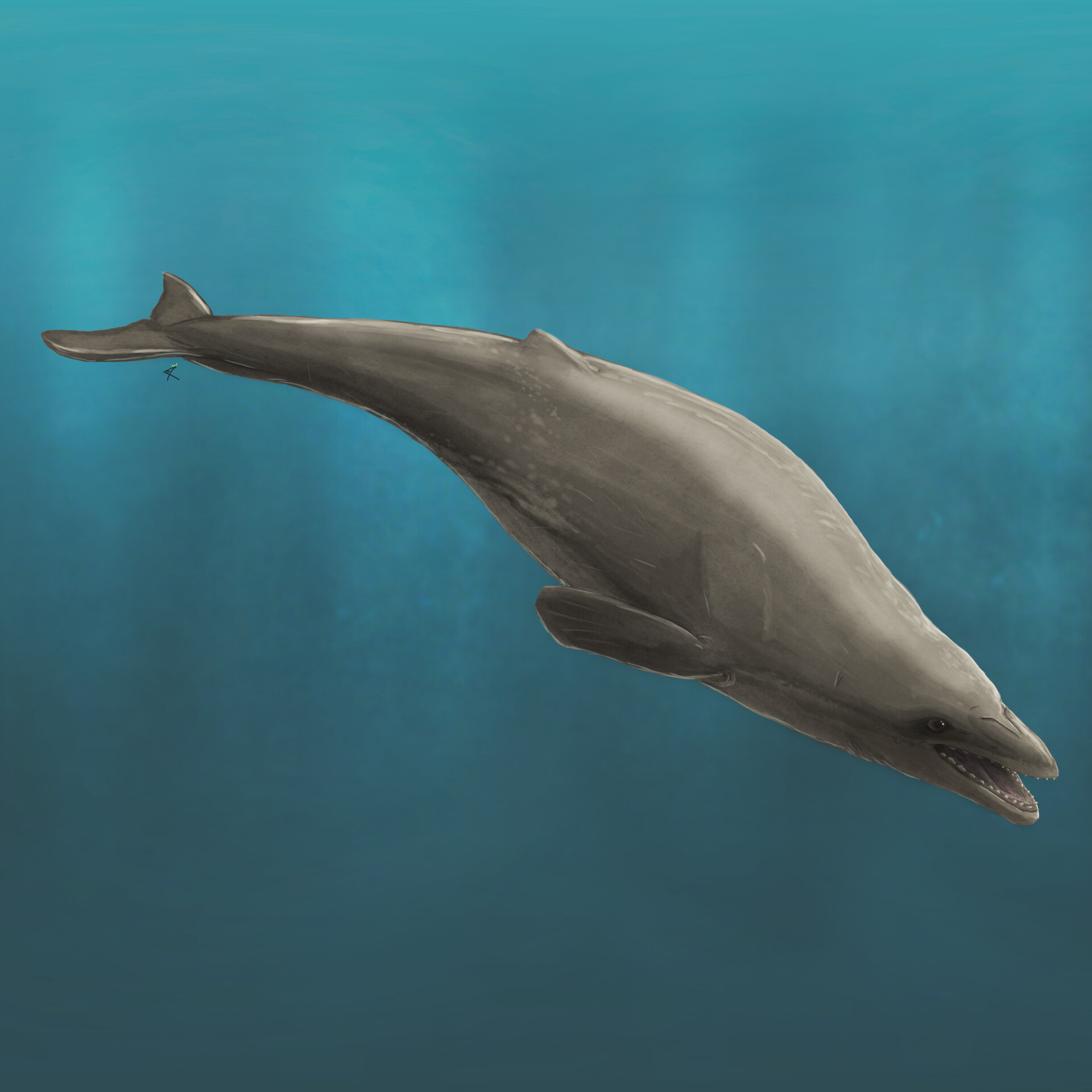
Fucaia goedertorum
Fucaia goedertorum, a toothed baleen whale from the Pysht Formation of Washington, USA. One of several small cetaceans that lived in what is today the Pacific northwest and part of the species rich Aetiocetidae, one of the last and most diverse groups of baleen whales with full sets of teeth.
Fucaia refers to the straight of Juan de Fuca, which separates the Olympic Peninsula from Vancouver Island, a region which has produced the holotypes of the toothed baleen whales Chonecetus, Borealodon, and the older, sister species Fucaia buelli. The species name refers to James and Gail Goedert, whose work collecting in this region has shed a huge amount of light on our understanding of whale evolution in this critical point in their evolutionary history.
The variable (heterodont) teeth, relatively broad snout and small size of the whale suggest it was likely feeding on small prey by generating negative pressure in its oral cavity, a process known as suction feeding which is employed extensively today for prey capture in dolphins and seals.